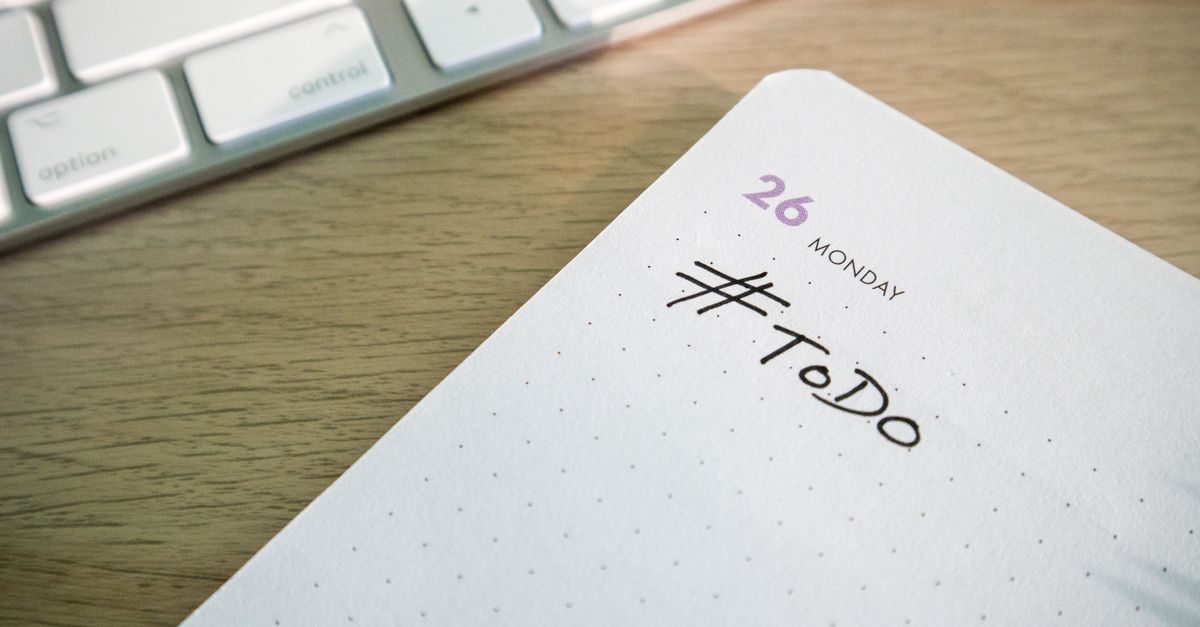
You’ve been there: a fresh Monday morning, a new to-do list sprawling across your notebook or digital app. It’s a beautifully organized catalog of intentions, a testament to your ambition. Yet, by Wednesday, a significant chunk of it remains untouched, transferred to the next day’s list, then the next. The items accumulate, the feeling of accomplishment dwindles, and soon, that carefully crafted list becomes a source of anxiety rather than a roadmap to success. You’re not alone. In my experience, the traditional to-do list, for all its widespread adoption, is one of the most consistently misused and ineffective tools for true productivity.
The mistake I see most often is treating a to-do list like a shopping list – a mere collection of items. But your time and energy are not infinite shelf space. What changed everything for me, and for countless clients I’ve guided, was understanding that a to-do list isn’t just about what you need to do, but how you plan to do it, when, and why it matters. Without this deeper strategic layer, you’re merely documenting your obligations, not engineering your output.
Key Takeaways
- Most to-do lists fail because they focus on quantity over strategic priority and realistic scheduling.
- Transform your list from a simple catalog of tasks into a tactical plan by linking tasks to specific outcomes and time blocks.
- Prioritize ruthlessly using a framework like the Eisenhower Matrix, focusing on impact and urgency, not just immediate appeal.
- Break down large, intimidating tasks into the smallest possible actionable steps to overcome inertia and gain momentum.
- Integrate ‘power tasks’ – items that directly move your most important goals forward – into your daily schedule first.
The Lie of Infinite Capacity: Why Your List Overflows
One of the biggest reasons traditional to-do lists crumble under their own weight is the unspoken assumption that you have an infinite capacity to complete tasks. We write down everything that comes to mind, every stray thought, every minor errand, every aspirational project – often without any real assessment of the time, energy, or resources required. This isn’t a list; it’s a brain dump. While a brain dump is an excellent starting point for capturing everything, it’s a terrible operating manual for your day.
For example, I once had a client whose daily to-do list consistently had 20-30 items, ranging from “email boss” to “strategize Q3 marketing plan.” The “email boss” might take 2 minutes, but “strategize Q3 marketing plan” could easily be a 4-hour, multi-day endeavor. Lumping these together creates an illusion of equal weight and effort. The result? The small, easy tasks get picked off, giving a fleeting sense of progress, while the truly impactful, larger tasks are perpetually deferred because they feel too daunting to start amidst a sea of smaller items. This leads to what I call “productivity theater” – looking busy without actually moving the needle on your most important objectives. You feel overwhelmed, constantly playing catch-up, and paradoxically, less productive than if you had tackled fewer, more significant items.
The solution isn’t to stop making lists, but to transform them. Instead of a simple [ ] task, your list items need to become [ ] Outcome: Task (Time Estimate) - Due Date. This immediately introduces a layer of realism and strategic thinking. It forces you to consider what you’re trying to achieve, how long it will realistically take, and when it needs to be done. It’s the difference between listing ingredients and listing a recipe with cooking times and instructions.
The Power of Prioritization: Not All Tasks Are Created Equal
If everything on your list is important, then nothing is. This is the brutal truth that most people ignore. Without a clear system for ranking tasks, you’ll naturally gravitate towards what’s easiest, most visible, or most urgent, even if it’s not the most impactful. Think about it: clearing out your email inbox often feels productive, but does it genuinely move you closer to your biggest goals? Often, the answer is no.
The mistake I consistently observe is a lack of rigorous prioritization. We often fall victim to the “tyranny of the urgent,” letting immediate demands dictate our day rather than proactively shaping it. This is where a framework like the Eisenhower Matrix becomes invaluable. It categorizes tasks into four quadrants based on their urgency and importance:
- Important & Urgent (Do First): Crises, deadlines, pressing problems. These require immediate attention. (e.g., “Finish client proposal due this afternoon.”)
- Important & Not Urgent (Schedule): Planning, prevention, relationship building, new opportunities. These are the growth drivers that often get neglected. (e.g., “Allocate 2 hours for strategic planning for Q3.”)
- Not Important & Urgent (Delegate): Interruptions, some meetings, busywork that can be handled by others. (e.g., “Respond to routine inquiry that team member X can answer.”)
- Not Important & Not Urgent (Eliminate): Time wasters, distractions, some emails, social media. (e.g., “Browse news feeds for 30 minutes.”)
When you apply this lens to your overflowing list, you’ll find that a significant portion of what you think needs to be done immediately actually falls into categories 3 and 4. The key is to relentlessly focus your energy on Quadrant 1 and, critically, proactively schedule time for Quadrant 2. Neglecting Quadrant 2 tasks ensures that your life will always be a reactive scramble of Quadrant 1 emergencies. By intentionally blocking out time for important, non-urgent tasks, you proactively reduce future crises and drive meaningful progress.
The Deceptively Simple Strategy: Breaking Down Elephant Tasks
“Write book.” “Launch new product.” “Learn a new language.” These are not tasks; they are projects. And attempting to put a project of this magnitude on a daily to-do list is a guaranteed path to failure and frustration. The sheer scale of such an item triggers procrastination because the initial activation energy required to even start feels insurmountable. You look at “Write book” and your brain immediately thinks of the hundreds of hours and thousands of words involved, rather than the immediate next step.
What changed everything for me was adopting the principle of radical task decomposition. Every large, daunting item needs to be broken down into the smallest possible actionable step – a step so small it feels almost ridiculous not to do it. If a task takes more than 30-60 minutes, it probably needs to be broken down further.
Let’s take “Strategize Q3 marketing plan.” Instead of that one vague item, I would break it down into:
- Review Q2 performance data (30 min)
- Brainstorm 3 key objectives for Q3 (45 min)
- Research competitor Q3 campaigns (1 hour)
- Draft initial outline of Q3 strategy document (1 hour)
- Schedule 1-hour brainstorming session with team (10 min)
Each of these smaller steps is now manageable. They have a clear start and end, and they contribute incrementally to the larger goal. The psychological barrier to starting is dramatically lowered. You gain momentum and a sense of accomplishment with each completed micro-task, which in turn fuels your motivation to continue. This isn’t just about making it easier; it’s about making it possible to start, sustain, and finish complex work.
The Power Hour: Integrating ‘Power Tasks’ into Your Day
Many productivity systems suggest tackling your biggest, most important tasks first thing in the morning. This is sound advice, but it often gets diluted into a vague intention. The problem is that without specifically scheduling that time, the urgent emails, last-minute requests, and general noise of the day will inevitably hijack your mornings.
My personal strategy, which has proven highly effective for many, is the “Power Hour” (or Power Block). This involves identifying 1-3 tasks from your Important & Not Urgent quadrant (Quadrant 2) that, if completed, would have the most significant positive impact on your long-term goals. These are your ‘power tasks.’ Then, you dedicate the first 60-90 minutes of your workday exclusively to these tasks, before checking email, taking calls, or diving into other people’s priorities.
For example, my power block might look like this:
- 7:30 AM - 8:00 AM: Write 500 words on the Awardsjungle article for next week.
- 8:00 AM - 8:45 AM: Analyze last month’s financial projections for my personal investment portfolio.
During this time, I turn off notifications, close unnecessary tabs, and treat this block as an unbreakable appointment with myself. The crucial insight here is that you’re not just planning to do important work; you’re scheduling it with the same reverence you’d give a client meeting. By consistently front-loading your day with these high-impact tasks, you guarantee that even if the rest of your day goes sideways, you’ve already moved the needle on what truly matters. It’s a proactive defense against reactivity and a powerful way to ensure consistent progress toward your most ambitious objectives.
The ‘Done List’ and Reflective Iteration: Celebrating Progress and Adapting
Traditional to-do lists are forward-looking documents of intention. While essential, they often overlook the psychological power of acknowledging progress. Constantly looking at an unfinished list can be demotivating. This is why I advocate for the “Done List.” At the end of each day or week, take a few minutes to jot down everything you actually accomplished, no matter how small. This isn’t about bragging; it’s about a concrete, visual representation of your output. It counteracts the natural human tendency to focus on what’s left undone and provides a tangible boost to morale and self-efficacy.
Beyond celebrating wins, an effective productivity system requires constant iteration and reflection. Once a week, take 15-20 minutes to review your productivity. Ask yourself:
- What did I get done that I’m proud of?
- What tasks were consistently pushed to the next day?
- Why were they pushed? (Lack of clarity, too big, no dedicated time, lack of interest?)
- What unexpected interruptions or opportunities arose?
- What one change can I make next week to improve my focus or output?
This isn’t about self-criticism; it’s about becoming a detective of your own habits. You’re gathering data on what works and what doesn’t. For instance, if you consistently defer a task because it feels too big, that’s a signal to break it down further. If you always run out of time for your ‘power tasks,’ it’s a cue to protect that morning block more fiercely. By regularly reflecting and adjusting, you transform your to-do list from a static document into a dynamic, personalized system that continually adapts to your evolving needs and helps you genuinely get more done, with less stress.
Frequently Asked Questions
Q: Is it okay to have multiple to-do lists for different areas of my life?
A: While it might seem intuitive, having too many separate lists (e.g., work, personal, family, projects) can lead to fragmentation and overwhelm. I recommend a single master list where everything is captured, then using categories, tags, or a robust prioritization framework (like the Eisenhower Matrix) to manage and filter. The goal is a single source of truth, not scattered information that requires you to constantly switch mental contexts.
Q: What’s the best tool for managing my to-do list?
A: The best tool is the one you will actually use consistently. For some, that’s a simple pen and paper. For others, it’s a digital app like Todoist, Notion, or Trello. The tool is far less important than the system and discipline you apply to it. Start simple, ensure it supports your prioritization method, and only add complexity if absolutely necessary.
Q: How do I handle unexpected tasks or interruptions that throw off my plan?
A: Plan for them! Acknowledge that your day will rarely go exactly as planned. Build in buffer time – perhaps 30-60 minutes in the afternoon – specifically for unexpected tasks, interruptions, or simply to catch up. For truly urgent interruptions, quickly assess their importance and urgency. If they’re a Quadrant 1 task, tackle them, but then immediately re-evaluate and adjust your remaining schedule. If not, schedule them for your buffer time or a later date.
Q: I feel guilty moving tasks from one day to the next. How can I overcome this?
A: Guilt often stems from unrealistic expectations. Instead of feeling guilty, use it as a data point. If a task is consistently deferred, it’s either too big (break it down), not truly important (re-evaluate or eliminate), or you haven’t allocated realistic time for it. Your to-do list is a living document, not a rigid contract. Be honest with yourself about what’s achievable in a given day, and use the ‘Done List’ to focus on what you did accomplish, not just what remains.
Q: How long should I spend creating my daily to-do list?
A: A strategic daily planning session should take no more than 10-15 minutes, ideally at the end of the previous workday or first thing in the morning. This time should be spent reviewing your master list, prioritizing, breaking down tasks, and slotting them into your calendar. Any longer, and you risk getting lost in planning rather than doing. Regular weekly reviews (15-20 minutes) can handle the broader strategic planning.
The traditional to-do list, on its own, is often an exercise in documentation, not execution. By shifting your mindset from a mere collection of tasks to a strategic plan that incorporates realistic time estimates, rigorous prioritization, task decomposition, and dedicated time blocks, you can transform your productivity. Start by choosing one of these strategies – perhaps dedicating 15 minutes tonight to breaking down your most daunting task, or blocking out your first 60 minutes tomorrow for a ‘power task.’ Consistent application of these principles will not only help you get more done but will also reduce the underlying stress and overwhelm that often accompany an endless list of unfulfilled intentions.